

- Overview
- Certification Benefits
- Audience
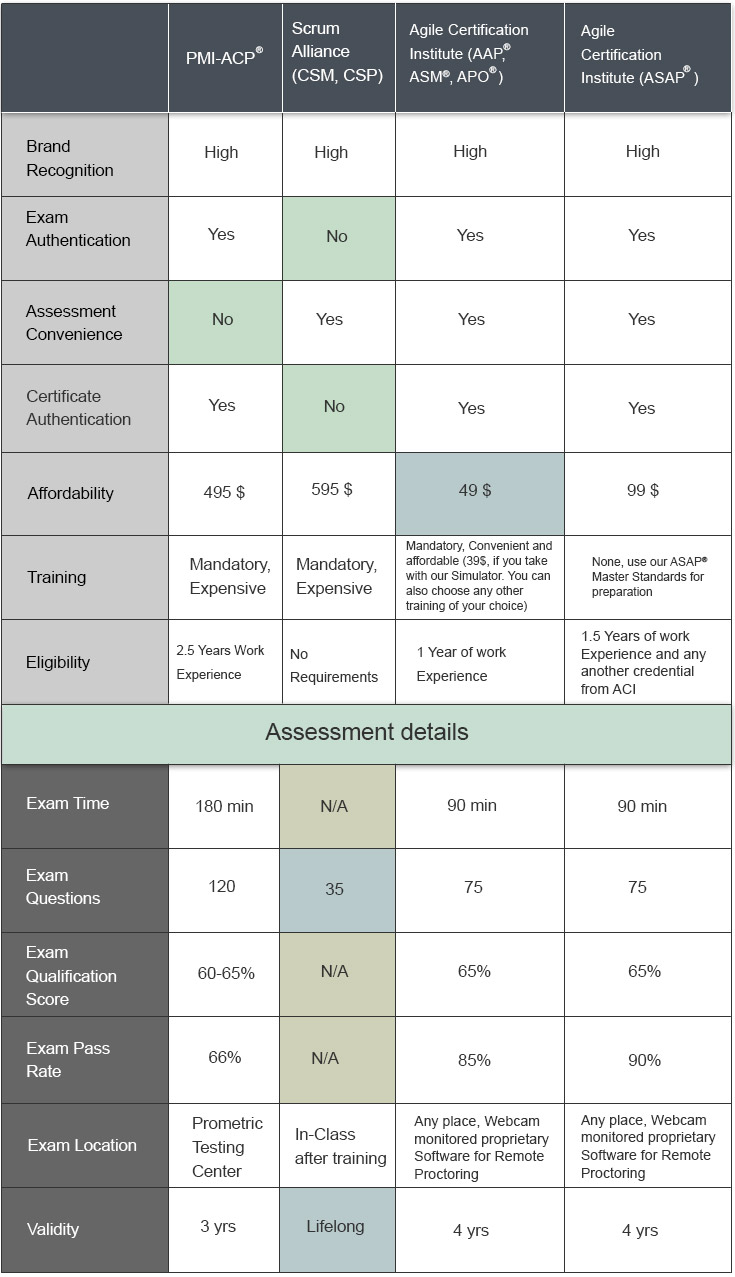
- Differentiators
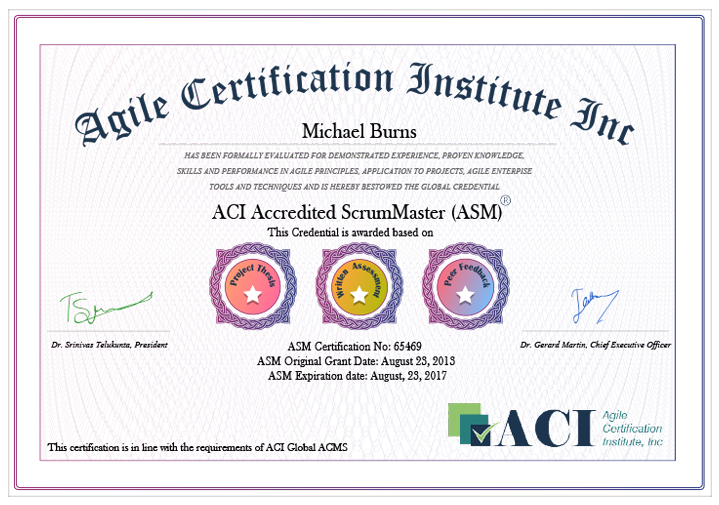
- Sample Certificate
- Training Options
- Concepts Review
- Practice Questions
- Register
- FAQ
Overview
Agile Project Management has become the buzzword across all the industries in today’s world. According to Gartner, Inc., IT organizations are under intense pressure to manage project resources for near-real-time changes. That’s why IT organizations are on the lookout for people trained in agile project management. Gartner predicts the demand for agile project leaders will increase by 75 percent from 2013 to 2017.
The agile approach to project management equips project teams to deliver quality results in reduced timeframes, plan for continuous improvement and to quickly respond to changing requirements.
The Scrum is an iterative and incremental agile development framework for managing projects and enables the creation of self-organizing teams specializing in breaking down complex and large scope of work in a very short period of time and involving every team member to fully realize the potential and offer superior value proposition to clients. Without a doubt it is one of the popular and leading Agile practices in the industry.
The ACI-ASM® credential recognizes your knowledge of scrum methodologies, enterprise tools, techniques, transforming the business requirements into working software and ensuring the productivity of the team. It is the ideal certification to test the candidate’s ability to apply the skills and knowledge necessary in the Scrum environment.


Though I was always working in an agile process environment with better-than-peer abilities, I still felt I needed a very special Agile-focused qualification if I wanted to break the glass ceiling and accelerate my growth. The ASM® program fit in my scheme of things perfectly as there's nothing as rigorous and as global as ASM®, as this qualification is from ACI®. Today, I am viewed with a greater respect by my peers and superiors and I am able to deploy global best-practices of agile more easily at my workplace.
BENEFITS OF ACCREDITED SCRUM MASTER (ASM®) CERTIFICATIONS
Benefits for Employees and Freelancers
- It will be your Proof of Competence and up-to-date Knowhow in Agile/Scrum.
- It will help you to get hired for your next challenge.
- It will broaden your perspective. It will help you to get more responsibilities and better career opportunities compared to your peers.
Benefits for Employers
- It will reduce costs by improving efficiency of your teams.
- It will help you to win projects with your qualified employees.
- It will improve employee satisfaction by encouraging them to get trained and learn.
- It will improve the quality of your deliverables and customer satisfaction.
WHO SHOULD GET ACCREDITIEDSCRUM MASTER CERTIFICATIONS?
Agile Scrum Master role is a very unique and broad role in Agile/ Scrum which combines all of the challenging aspects of traditional Project Management andScrum. Moreover, Scrum Master represents the customer point of view in aAgile project,to ensure maximum added value for each and every release to the customer.
We recommend you to obtain ASM® certification if you are performing one of the following roles:
- Business Analyst
- Program Manager
- Product Manager
- Team Leader
- Project Manager
- Designer
- Architect ……etc
Differentiators
Sample Certificate
TRAINING OPTIONS
- At this point in time, ACI® does not insist on any mandatory training from our organization to take up ASM® certification. You can take training from any organizations of your choice to satisfy the mandatory training requirements for the ASM® credential. However, we have noticed that 20% of our credential holders (in a mandatory post assessment survey) have indicated they have taken training from our own "Agile Training Simulator".
- You can do self study based on content available on our website and also practice some of the questions available on our website in addition to purchasing a license for our "Agile Training Simulator".
- You are also strongly encouraged to study the reference books suggested in the later sections of ASM® Handbook to feel confident about taking up the ASM® certification exam.
CONCEPTS REVIEW
Basic concepts of the Scrum
The Scrum is an iterative and incremental agile software development framework for developing and managing software projects and application development. It was first advocated in 1986 by Hirotaka Takeuchi and IkujiroNonaka. It is called the rugby approach, as the entire process is performed by one cross-functional team across multiple overlapping phases.
The potential benefits of Scrum is realized through its tools like product backlog, sprint backlog, burn-down charts and techniques like daily meetings, sprint planning and review meetings. The team is highly motivated by challenges in developing opportunities from discussing requirements to implementing the product. Hence it represents a cultural change for organizations used to more traditional methods.
The figure below depicts a typical flow of Scrum
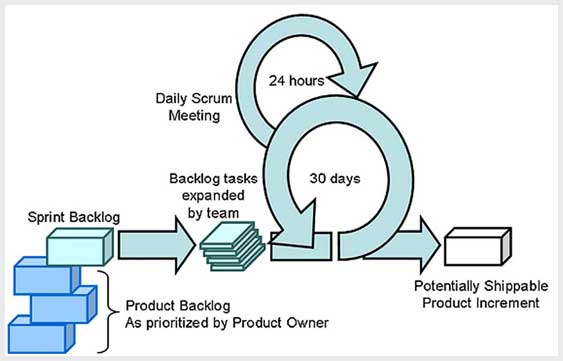
Scrum Flow
Scrum – Empirical Process Control Model
The Scrum is based on Empiricism which states that applied knowledge is derived from experience, observation and making informed decisions on the known factors. This approach treats product development as a self-organizing process enabling Scrum teams to deliver working model software in an iterative manner to meet customer requirements.
The Three Components of an implementation of empirical process control are
Transparency: Those aspects of the process that affect the outcome must be visible to those controlling the process
Inspection: The various aspects of the process must be inspected frequently enough that unacceptable variances in the process can be detected.
Adaptation: The process or the material being processed must be adjusted if one or more aspects of the process are outside acceptable limits and the resulting product will be unacceptable.
Scrum Roles
There are three fundamental roles in the Scrum method of agile software development. These are also referred to as Core roles.
- Product Owner
- Team
- Scrum Master
The Product Owner is accountable for ensuring the team delivers value to the business and is the voice of the customer.The Team consists of a group ranging between 7-9 individuals with cross functional skills and is responsible for the delivery of potentially shippable product increments.
The Scrum Master is the buffer between the team and any distracting influences and he is responsible for removing the impediments to the team in their task of the deliverables. He is also responsible for defining and facilitating the process and facilitates the team to improve.
He is often referred to as the servant-leader.Scrum supports the core roles and a range of ancillary roles. The core roles are committed to the project and directly involved in building the product.
Ancillary roles are outside the Scrum and have no formal role in the Scrum process however they too are involved in the overall enterprise environments. They could be:
- Project Manager – Responsible for the project’s success
- Stakeholders – Responsible for enabling the project and justify the project
- Project Board– Accountable for the project where issues are outside of the Scrum Team
Scrum Structure
The Scrum structures product development in cycles of work known as Sprints. A Sprint is the basic unit of development in Scrum and is of a specific fixed duration, which cannot be extended whether the work is completed or not. This is called ‘Timboxed’ effort.
A typical Sprint is 1-4 weeks long and takes place one after another(Sprint follows Sprint). At the beginning of each Sprint, a cross-functional team selects items from a prioritized list of requirements, andcommits to complete them by the end of the Sprint; during the Sprint, the deliverable does not change.
Each work day, the team gathers briefly to report to each other on progress, and update simple charts that orient them to the work remaining. At the end of the Sprint, the team demonstrates what they have built, and gets feedback which can then be incorporated in the next Sprint. Scrum emphasizes producing working product at the end of the Sprint is really “done”; in the case of software, this means code that is fully tested and potentially shippable.
Scrum adopts the policy of “inspect and adapt” where for a unit of development the learning and experience is improved by inspecting both the resulting product and the efficacy of the existing processes and aligning them with the product goals and practices.
TheScrumTeam
TheScrumTeamconsists ofa ProductOwner,theDevelopmentTeam, andaScrumMaster. ScrumTeamsareself-organizingand cross-functional. Self-organizing teamschoosehowbest to accomplish their work,ratherthan being directed by othersoutsidethe team. Cross-functional teams haveallcompetenciesneededtoaccomplish theworkwithoutdependingon others not part oftheteam. Theteam model in Scrumisdesignedtooptimizeflexibility, creativity, and productivity.
ScrumTeamsdeliverproductsiterativelyandincrementally,maximizing opportunitiesfor feedback. Incremental deliveries of“Done” productensurea potentiallyusefulversionof workingproductis alwaysavailable.
The Product Owner
TheProductOwnerisresponsible formaximizingthevalue of theproductandtheworkofthe Development Team. Howthis isdonemayvarywidelyacrossorganizations, ScrumTeams, and individuals.
TheProductOwneristhesolepersonresponsible formanagingtheProductBacklog. Product Backlogmanagement includes:
- Clearlyexpressing ProductBacklogitems;
- Ordering the items intheProductBacklogtobestachievegoalsandmissions;
- Optimizing thevalueoftheworktheDevelopmentTeamperforms;
- Ensuring thattheProductBacklogisvisible, transparent,andcleartoall,andshowswhat the ScrumTeam willworkonnext;and,
- nsuring the DevelopmentTeamunderstands items intheProductBacklogtothelevel needed.
The Development Team
TheDevelopmentTeamconsists ofprofessionalswho do thework of delivering apotentially releasableIncrementof“Done”productattheendofeach Sprint.Only membersofthe Development Teamcreatethe Increment.
Development Teams arestructured and empowered by theorganizationtoorganizeand managetheirownwork.TheresultingsynergyoptimizestheDevelopmentTeam’s overall efficiencyandeffectiveness.
Development Teamshavethefollowingcharacteristics:
- Theyareself-organizing. Noone(noteven theScrumMaster)tells theDevelopment Team howto turnProductBacklogintoIncrementsof potentiallyreleasablefunctionality;
- Development Teams arecross-functional, with allof theskillsas ateamnecessarytocreate a productIncrement;
The ScrumMaster
TheScrumMasteris responsible forensuringScrumis understoodandenacted.ScrumMasters dothis by ensuringthattheScrumTeamadherestoScrumtheory, practices, andrules.
TheScrumMasteris aservant-leaderfor theScrumTeam. TheScrumMasterhelps thoseoutsidethe ScrumTeamunderstandwhichoftheir interactions with theScrum Teamarehelpful and whicharen’t.TheScrumMasterhelpseveryonechangetheseinteractions tomaximizethe valuecreated bythe ScrumTeam.
ScrumEvents
Scrumprescribesfourformaleventsforinspectionandadaptation,
- Sprint Planning
- DailyScrum
- SprintReview
- SprintRetrospective
Prescribed eventsare usedinScrumtocreateregularityandtominimizetheneedformeetings notdefinedin Scrum.All eventsaretime-boxed events,suchthateveryevent has amaximum duration. OnceaSprintbegins, itsdurationisfixed andcannotbeshortened orlengthened. The remaining eventsmayendwheneverthe purposeof theevent isachieved,ensuringan appropriateamountof timeis spentwithoutallowingwastein theprocess.
Otherthanthe Sprintitself,whichisa containerfor allotherevents,eachevent inScrumisa formal opportunitytoinspectandadapt something. Theseeventsarespecificallydesigned to enable critical transparencyandinspection.Failuretoincludeanyoftheseevents resultsin reduced transparencyandisa lostopportunitytoinspectandadapt.
The Sprint
TheheartofScrumisa Sprint,atime-boxofone monthor less duringwhicha “Done”,useable, and potentiallyreleasableproductIncrement iscreated.Sprintsbest have consistentdurations throughoutadevelopmenteffort. A newSprintstartsimmediatelyafterthe conclusionofthe previousSprint.
Sprintscontainandconsistof the SprintPlanning, DailyScrums,thedevelopmentwork,the SprintReview,andtheSprintRetrospective. DuringtheSprint:
- Nochangesaremade thatwould endangertheSprintGoal;
- Qualitygoals donotdecrease;and,
- Scopemaybeclarifiedandre-negotiatedbetweentheProductOwner andDevelopment Teamas moreis learned.
Sprint Planning
Thework tobeperformedintheSprintis plannedattheSprint Planning. This planiscreatedby the collaborativeworkoftheentireScrumTeam.
Sprint Planning is time-boxed toamaximumofeight hours for aone-month Sprint.For shorter Sprints,theeventis usually shorter. TheScrumMasterensuresthat theeventtakesplaceand that attendantsunderstanditspurpose. TheScrum Masterteaches theScrumTeamtokeepit withinthetime-box.
Sprint Planning answersthefollowing:
- Whatcan bedeliveredin theIncrementresultingfrom theupcomingSprint?
- Howwill thework neededtodelivertheIncrement beachieved?
Bytheendof theSprintPlanning, the DevelopmentTeamshouldbeable toexplaintothe ProductOwner andScrumMasterhowitintends toworkas aself-organizingteamto accomplish theSprintGoalandcreatetheanticipatedIncrement.
SprintGoal
TheSprintGoal isanobjectivesetforthe Sprintthat canbemet throughtheimplementationof ProductBacklog. It provides guidanceto theDevelopmentTeamonwhyitis buildingthe Increment. ItiscreatedduringtheSprint Planningmeeting.TheSprintGoalgivesthe Development TeamsomeflexibilityregardingthefunctionalityimplementedwithintheSprint. Theselected ProductBacklogitemsdeliveronecoherent function, whichcanbetheSprintGoal. TheSprintGoalcanbeanyothercoherencethatcausestheDevelopmentTeamto work togetherratherthanonseparateinitiatives.
DailyScrum
TheDailyScrumisa15-minutetime-boxedeventforthe DevelopmentTeamtosynchronize activitiesand createa planfor thenext24hours.This isdonebyinspectingthework sincethe last DailyScrumandforecastingtheworkthat couldbedone beforethe nextone.TheDaily Scrumisheld atthe sametimeandplaceeach day toreducecomplexity.Duringthemeeting, theDevelopmentTeam membersexplain:
- What didI doyesterdaythat helped theDevelopmentTeammeetthe SprintGoal?
- WhatwillI dotodaytohelptheDevelopmentTeammeet theSprintGoal?
- DoI seeanyimpediment thatpreventsmeortheDevelopmentTeamfrommeetingtheSprintGoal. DailyScrumsimprovecommunications, eliminateothermeetings, identifyimpedimentsto developmentfor removal,highlightandpromotequickdecision-making, andimprovethe Development Team’s levelof knowledge.This isakeyinspectandadapt meeting.
Sprint Review
A SprintReviewis held attheend of theSprinttoinspect theIncrement andadaptthe Product Backlogif needed. DuringtheSprintReview,theScrumTeamandstakeholderscollaborate aboutwhatwasdoneintheSprint. Basedonthat andanychanges to theProductBacklog duringtheSprint,attendees collaborateonthenext things thatcouldbedonetooptimizevalue. This is aninformalmeeting,nota statusmeeting,andthe presentation of thencrement is intended toelicitfeedbackandfostercollaboration.
This is a four-hourtime-boxedmeetingforone-monthSprints.For shorterSprints,theevent is usuallyshorter. TheScrumMasterensures thattheevent takesplaceandthatattendants understanditspurpose. TheScrumMasterteaches alltokeep itwithinthetime-box.
TheSprintReviewincludesthe followingelements:
- Attendees includetheScrumTeamand keystakeholdersinvited bytheProductOwner;
- TheProductOwnerexplainswhatProductBacklogitemshavebeen“Done”andwhat has notbeen“Done”;
- TheDevelopmentTeamdiscusseswhatwentwell duringtheSprint,whatproblems itran into, andhowthoseproblems were solved;
- TheDevelopmentTeamdemonstratestheworkthatithas“Done”andanswersquestions abouttheIncrement;
- TheProductOwnerdiscussestheProductBacklogasitstands. Heor sheprojectslikely completiondatesbasedonprogress todate(if needed);
- Theentiregroupcollaboratesonwhattodonext, sothat theSprintReviewprovides valuableinputtosubsequentSprint Planning;
- Reviewof howthemarketplace orpotential useof theproductmighthavechanged whatis themostvaluable thingto donext;and,
- Reviewofthe timeline,budget,potentialcapabilities,andmarketplaceforthenext anticipatedreleaseofthe product.
TheresultoftheSprintReviewisa revisedProductBacklogthat definestheprobableProduct Backlogitems forthe nextSprint. The ProductBacklogmayalsobeadjustedoverall to meetnew opportunities.
Sprint Retrospective
TheSprintRetrospectiveisanopportunityforthe ScrumTeamtoinspectitself andcreatea plan for improvementstobeenactedduringthenextSprint.
TheSprintRetrospectiveoccurs aftertheSprintReviewandprior to thenextSprint Planning. This is athree-hour time-boxedmeetingforone-month Sprints.ForshorterSprints,theevent is usuallyshorter. TheScrumMasterensures thattheevent takesplaceandthatattendants understanditspurpose. TheScrumMasterteaches alltokeep itwithinthetime-box. TheScrum Masterparticipatesas apeerteam memberinthemeetingfromthe accountabilityoverthe Scrumprocess.
Thepurposeof theSprintRetrospectiveis to:
- InspecthowthelastSprintwent withregards topeople,relationships, process,andtools;
- Identifyandorderthemajor items thatwentwellandpotentialimprovements;and,
- Createaplanfor implementingimprovementstothewaythe ScrumTeamdoesitswork.
ScrumArtifacts
Scrum’s artifactsrepresentworkorvaluetoprovidetransparencyandopportunities for inspectionandadaptation.Artifactsdefined byScrumare specificallydesigned tomaximize transparencyofkeyinformationso thateverybodyhas thesameunderstandingof theartifact.
Product Backlog
TheProductBacklogisan orderedlistofeverythingthat mightbeneeded inthe productand is the single source ofrequirementsfor anychangestobemadetothe product. TheProduct Ownerisresponsible for the ProductBacklog,including its content,availability,and ordering.
A ProductBacklogisnevercomplete. Theearliestdevelopmentofitonlylaysouttheinitially known andbest-understoodrequirements. TheProductBacklogevolvesas theproductandthe environmentinwhichitwillbeusedevolves. The ProductBacklogisdynamic;it constantly changestoidentify whattheproductneedstobeappropriate, competitive,anduseful. As long as aproductexists, itsProductBacklogalsoexists.
TheProductBackloglistsall features, functions,requirements,enhancements,and fixesthat constitutethe changestobemadetothe productin future releases.ProductBacklogitems have the attributesof adescription, order,estimateand value.
Sprint Backlog
TheSprintBacklog istheset ofProductBacklogitemsselected for theSprint,plusaplanfor deliveringtheproductIncrementandrealizingtheSprintGoal.TheSprintBacklog isaforecast by theDevelopmentTeamaboutwhatfunctionality will be in thenextIncrementandthe work needed todeliverthatfunctionalityintoa“Done”Increment.
TheSprintBacklogmakesvisibleall oftheworkthat theDevelopmentTeamidentifies as necessarytomeetthe SprintGoal.
TheSprintBacklog is aplanwithenough detailthatchangesinprogress canbeunderstoodin the DailyScrum.TheDevelopment Team modifiestheSprintBacklogthroughoutthe Sprint,and theSprintBacklogemergesduringtheSprint.Thisemergenceoccurs astheDevelopment Team worksthroughtheplanandlearnsmoreabouttheworkneededto achievetheSprintGoal.
Definition of“Done”
When aProductBacklogitem or anIncrementisdescribed as“Done”, everyonemust understand what “Done” means.Althoughthisvaries significantlyperScrumTeam,members musthavea shared understandingof whatit means for work tobecomplete,toensure transparency.This isthe definition of“Done”for theScrumTeamandisused toassesswhen workiscompleteontheproductIncrement.
Thesamedefinitionguidesthe DevelopmentTeaminknowinghowmanyProductBacklogitems it canselectduringaSprint Planning. Thepurposeof eachSprintis todeliverIncrementsof potentiallyreleasablefunctionalitythatadheretotheScrumTeam’s current definitionof “Done.”
As ScrumTeamsmature, itis expectedthat their definitionsof“Done”will expand toinclude morestringent criteriaforhigherquality.Anyoneproduct orsystemshouldhaveadefinitionof Done” thatis astandardfor anywork doneon it.
PRACTICE QUESTIONS
1. Which of the following is NOT an Agile methodology
- Scrum
- Crystal
- Extreme Programming
- Prototyping
2. Which of the following is a 'TRUE' statement
- Extreme Programming is usually a set of technical practices for software development
- Scrum and Extreme Programming are synonymous
- Product Owner is a 'servant leader' who helps the rest of the team to follow the process
- Scrum Master does not help the team in removing obstacles
3. Each Sprint begins with a
- Manager-Team meeting
- Scrum meeting
- Kickoff meeting
- Business requirement meeting
4. How often do Scrum Teams meet
- Daily
- Weekly
- Project meetingsscheduled by the Project Manager
- Flexible
5. Conduct a Sprint meeting at the end of Sprint is
- Scrum rule
- Scrum technique
- Scrum methodology
- Generallyaccepted Scrum practice
6. Duration of a Sprint can be
- Extended
- Extended based on changing requirements
- Extended upon the discretion of Scrum Master
- Never extended
7. A typical Scrum has mandatory artifacts numbering
- 2
- 3
- 4
- Can be added as per requirement
8. Burndown Graph is a
- A trend of work accomplished across a time in Sprint
- A trend of work remaining across a time in Sprint
- A Sprint Plan to measure progress
- A Graph to assess the workload of each resource
9. Scrum was first developed by
- James Gosling
- Robert Pressman
- Hirotaka Takeuchi
- Kaizen
10. During a Sprint
- Sprint Backlog can be updated according to changing requirements
- Sprint Backlog cannot be updated according to changing requirements
- Sprint Backlog can be updated by discretion of Scrum Master
- Sprint Backlog cannot be updated by discretion of Scrum Master
According to IDC, 63% of Hiring Managers believe certified individuals are more productive than their non-certified counterparts. Get Certified. Get Ahead.
Get certified as "Accredited Agile Practitioner ASM" for 49$ Now!
FAQ
I found your web site after checking out USD 2000 price from another Scrum certification provider for training and 500$ for certification. That is too much for me to personally pay for. I am interested in making a certification program from your Agile Certification Institute for ScrumMaster. However, I don't have much background and project experience with Agile/Scrum. What is your suggestion?
At this point in time, ACI® does not impose a policy that you have to be trained from any expensive training providers to appear for our certifications. You can get training on Agile concepts from our website links and also the Master Standards which are provided to you once you register for the exam. Almost 40% of our certificants appear for certifications without any additional training (other than our website links and the Master Standards made available once you register).
How are the success rates of Agile certification programs?
The first time Success rate of Accredited Agile Practitioner (AAP®) Certification Program is 80%, whereas the success rates of Accredited ScrumMaster (ASM®) Certification is 82%. For Accredited Product Owner (APO®) Certification and Accredited SAFe Agile Practitioner (ASAP®) Certification Programs are 65%. However, most candidates seem to clear the certification in their second attempt, thereby incurring no additional expenses (All our certification programs provide two attempts for a single registration towards any certification)
Can you please provide more insights about the structure of the questions of your certification programs?
The exam questions contains of a total of 75 questions to be answered in 90 minutes. The questions are based on the Master Standards approved by Agile Professional Certification Council (APCC) with a 50:50 focus on the theoretical aspects as well as practical challenges of working in an agile setting.
How soon after the registration, will I receive access to take the examination?
After you register for the exam, you have to choose a slot which is preferable for you. We provide 24 slots in a day and they are available all 365 days in a year. The remote proctoring is done via webcam (so your computer MUST have a working webcam to take up this certification). The exam software locks your screen and hence you cannot change your browser. Also you will not be allowed to move away from the computer screen during the exam. Any such violations will result in forfeiture of your attempt at the exam and you will have to take a second attempt.
How soon after the completion of my examination, will I receive my Certification and Test Results?
It is a matter of a few seconds. Your answers are processed and evaluated real-time and you will receive your test results as soon as you submit the answers of your Agile Certification Examination. However to receive the certification, you have to clear all the three levels- Written Assessment, Submission of a Thesis (600 - 900 words) and a peer / managed feedback.
Can you let me know the procedure for the examination and details of written assessment?
Before you take the examination, as part of registration you are required to upload one of the photo ID's recommended by APCC (Includes a passport, a valid driving license of your country or any other government issued photo ID). Your ID will be verified against you personally via webcam before the test lock is released on your appointed registration time so as to ensure the test takes is the person whose ID is presented. We provide 24 slots in a day and they are available all 365 days in a year. This means pretty much you can take the exam anytime you want in a year. Our proctoring team works from three different countries so as to enable 24x7 coverage of the test taking. The registration is valid for a period of one year. The remote proctoring is done via webcam (so your computer MUST have a working webcam to take up this certification). The exam software locks your screen and hence you cannot change your browser or search online or use your browser for any purpose other than taking test during this period. Also you will not be allowed to move away from the computer screen during the exam. Any such violations are treated with seriousness and you will become ineligible to continue the certification exam. You will have to take up the exam after re-scheduling and this shall be treated as a second attempt.
Can you let me know more details of Thesis submission?
The thesis to be submitted should be between 600 words and 900 words (Roughly about one A4 page equivalent). The topic can be chosen by the candidate. Several topics and samples of previous thesis submissions are provided to candidate after they clear the assessment test. Most candidates have no difficulty clearing the Thesis level.
Can you let me know more details of peer/manager submission?
Once you submit the thesis, you will have to get recommendations from three members (either peers or managers) recommending this credential be bestowed upon you. Each of the referee has to fill an online recommendation from which consists of five (5) questions on which he will be rating on a scale of 1-10 (1 is low and 10 is highest). All these recommenders must possess a valid corporate e-mail ID (Any exceptions need approval from APCC). You will have to get an aggregate of 50% in all the recommendations to obtain the ACI credential. In case, you do not get the required rating, you can modify the reference providers and re-submit to a new set of recommenders. Our past records indicate no one had difficulty clearing this final round of assessment.
What is the validity of the registration?
You must complete all the requirements of the assessment within one year from the date of registration. If you cannot complete all the formalities of the assessment, you will automatically lose your registration and have to register.
I have received your global credential for Agile Certification recently. Is there any validity to my certificate? Also, should I pay any annual membership fees?
Once you are certified by ACI®, the certification is valid for 4 years. Every 4 years you have receive 45 knowledge points (KPs) to renew your certification. The Master Standards on Agile undergo changes every few years and we want all our certificants to update their knowledge every 4 years. However, you do NOT need to write the exam again. One knowledge point is approximately equal to one hour of class room instruction or one hour of effort on reading a relevant text book etc. You will have to pay a fee of 20$ every four years to renew your credential and maintain your licence details in our certified agile Practioners database. However, most of this information is available in "My ACI" once you get certified. Most of the relevant books are available as e-copies to be read online in "My ACI®" and these count towards earning KPs.
Will you help me get a job?
ACI® does not act like a placement agency and we do not directly provide jobs to any certificants. However, "Planet ACI® " provides a networking platform for Job providers from various companies all around the planet to post relevant jobs.
While I am making examination if I lose my Internet connectivity due to some technical issues, do I have to pay again to access the certification examination?
No problem at all. If this happens please inform us per e-mail and we will reactive your examination access code free of charge.
I just passed one of your certification programs. What kind of certificate do I receive?
As soon as you complete all the requirements of the certification, you will receive a PDF certificate which is printable if you wish (as it is generated with high quality). In addition, you will also receive your paper based certificate by regular mail within 3 months of clearing all the certification requirements. Please keep in mind that our paper certifications are processed in our back offices located in Singapore, India and Qatar and will contain metal objects (lapel pins) hence you will have a long lead time of 3 months to clear the customs requirements of your country. However, our database will reflect your certificate authenticity from the instant you clear all the requirements and you can use that in your CV.
I am considering registration for your Certification program. However, I have never possessed such a certification and I just would like to understand how such a certification looks like?
You can see a low resolution and miniaturized copy of the certificate in the respective section of the programs by selecting the respecting program links and navigating.
What is the difference between the certifications provided by Agile Certification Institute and other organizations?
According to our market analysis our programs cost less than 1/5 of the lowest cost of other online Scrum certification programs with better brand in the market. Moreover, together with the trust of our thousands of certificants we have brought a modern and friendly approach into the field of online Agile / Scrum certification programs which doesn't mandate practitioners like you to receive expensive classroom trainings before you prove and certify your competence in Agile/Scrum.
Why is your cost lower than others?
We use the latest technology in certification test taking based on Remote Proctoring and Screen Locking facilities in addition to large scale certification operations which brings down our cost of operations. We pass on some of these advantages to you, our certifications takers.
Are Scrum certifications valid in Europe and in Asia?
Yes. Certifications we issue are worldwide valid including in Europe and in Asia. Our certifications are valid and recognized in more than 120 countries around the world.
Will I get reimbursement for this certification from my organization?
ACI provides you with a detailed invoice. This coupled with successful completion of a certification from ACI provides you with reimbursement in most organizations around the planet. In case, you are not successful in claiming the reimbursement, you could alert us post your successful certification through "My ACI". Our global support team will then work with the leaders of your organization to enable reimbursement.
Will I get a promotion by taking up your certification?
In most organizations, this counts towards continuing education and should enable you to get recognition and improve the chances of your promotion but keep in mind that this cannot be guaranteed by ACI®. Based on a survey of more than 1000 certificants in the past, we have seen an average of 3000% ROI on their investment on ACI certifications.
I am going to register for an agile certification program. Can I make the payment by using my credit issued from a Scotland bank?
Yes. Our trusted payment partner accepts all major credit cards issued from all banks around the world including the banks from Scotland.